5 Cold-Weather Outdoor Dining Tips for Restaurants
Matthew Gentile / Foodservice Tips, Restaurant Tips / October 16

With fall in full swing and winter just around the corner, an outdoor patio might not seem feasible. But there are still restaurants that can pull it off. The COVID-19 pandemic is forcing restaurants and dining establishments to get creative. As the temperature drops, indoor dining might be limited to reduced capacity or restricted entirely.
Patio dining was used heavily in the late spring and summer to help with proper air circulation and social distancing, but how is it possible in fall and winter? Below are some helpful tips for restaurants hoping to pull off cold-weather outdoor dining this year.
NOTE: This guide also provides basic tips for restaurants to meet new measures related to the COVID-19 pandemic. Please consult the latest regulations from public health and government entities for full guidance.
Cover the Area
Whether it happens occasionally or regularly in your area, you need to be ready for snow. Many establishments have used tents or canopies to cover patios or outdoor dining areas. This helps protect patrons and staff from flurries or decent dusting of snow. If you use a tent, make sure that it’s not walled off on all sides. At least two side of the tent should remain open to ensure better air flow and circulation. Any tent or covering should be properly anchored to the ground during season.
Keep in mind that both options can be costly. If a tent or covering is not in your budget, make sure you follow the forecast carefully and add proper heating solutions. We’ll address these in a couple of the tips below.
Add Plenty of Heaters
Heating solutions are crucial for outdoor dining, whether it’s in extreme cold or mild temperatures. Station gas heat lamps and electric space heaters throughout the area to keep guests warm. You may need an electrician to verify if you’re equipped to run multiple electric heaters at once. If not, additional power will be required. Heating solutions not only will keep patrons and staff warm, but they also will ensure any hardware or smart devices don’t freeze. This is crucial to keeping POS systems running smoothly to process payments, whether it’s touchless pay or via a credit card machine.
Space Your Tables & Limit Party Sizes
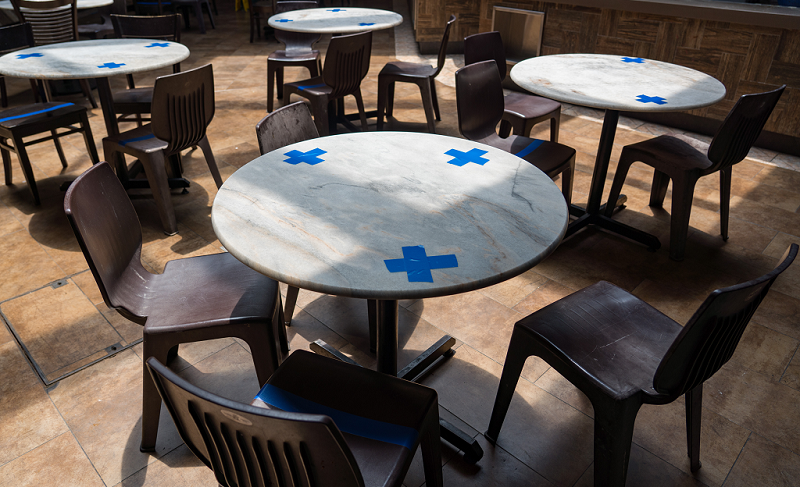
Of course, social distancing is a major factor in both indoor and outdoor dining. Like the new interior layout of a restaurant, each table should be at least 6 feet – or 2 arms’ length – apart to ensure proper distance. Also, make sure they’re anchored to the ground along with each chair. Consider limiting the number of people who can be seated at each table to ensure a manageable capacity. Both bistro and small banquet tables can seat parties between 2-6 people. As an extra precaution, post signage that reinforces spacing and asks patrons to remain at their own table while they dine.
Invest in Humidifiers
While your staff and patrons are spaced appropriately outdoors, the dining area still could have a decent amount of people. Not to mention, if you opt for a tent, the air flow could be more restricted than a dining space without one. For additional assurance, space a couple of humidifiers throughout the area. These can help circulate air flow and filter any lingering bacteria, germs or other contaminants in air.
Know When to Close
Halting outdoor dining is a difficult decision to make, but certain types of weather could force your hand. Depending on where you’re located, the winter weather can produce snow and bitter cold. If there is a blizzard, negative temperatures or severe wind chills in the forecast, be proactive and should shut down outdoor dining until it’s safe to reopen. Post signage at your location and alert followers on social media when outdoor dining is closed. In the meantime, focus on your delivery and pick-up operations or switch solely to indoor dining if local government or health regulations allow it.


