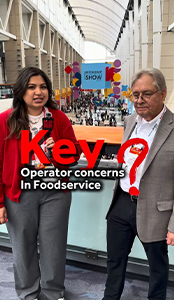
Foodservice Equipment Trends from the 2026 National Restaurant Association Show: A Conversation with Robin Ashton
Parts Town / Thought Leadership / June 16

At the 2026 National Restaurant Association Show, Parts Town sat down with longtime foodservice equipment industry expert, Robin Ashton, to get his take on the biggest trends shaping the foodservice equipment and supplies industry. Ashton pointed to stronger-than-expected activity from chain and institutional buyers, more process-specific automation, increasing beverage innovation and greater use of fast cooking technologies. AI embedded equipment controls, and ongoing refrigerant changes along with operators continued focus on serviceability and reliability were also prevalent trends.
At a Glance: The top foodservice equipment trends from the 2026 National Restaurant Association Show included stronger equipment and supplies activity, process-specific automation, AI embedded in equipment controls, beverage innovation, fast cooking technologies, refrigerant changes and continued operator focus on serviceability and reliability.
Top Trends at the 2026 National Restaurant Association Show
1. Equipment and Supplies Activity Is Stronger Than Expected
The most obvious trend Ashton saw was that the show was busier than many equipment and supplies companies had expected.
As he spoke with exhibitors and asked how business was going, many said they were surprised by the strong turnout of chain operators and institutional buyers at the show. This points to ongoing operator investment in foodservice equipment and supplies, even in a market where purchasing decisions tend to be pragmatic and performance-based.
For manufacturers, suppliers and parts providers, this activity suggests that chain and institutional operators are prioritizing equipment and supplies investments.
2. Automation Is Becoming More Specific and Process-Focused
Automation was another major theme at the show, but Ashton described it as targeted rather than broad.
He saw automation being built into specific products and processes, not general-purpose robots or blanket automation. These solutions are meant to cut out manual processes that still exist in foodservice operations.
In foodservice equipment, automation may appear through electronic controls, AI-enabled functionality or equipment features that simplify a specific step in the operator’s workflow. The key trend is not automation for its own sake. It is automation that helps operators complete defined tasks more consistently, efficiently or easily.
3. AI Is Embedded in Equipment Controls
On the equipment side of the show, Ashton said AI is being integrated into equipment controls and product functions.
For foodservice operators, this means AI may increasingly be experienced through equipment performance, controls and usability rather than through separate AI tools.
4. Why Are Beverages a Major Focus Area for Foodservice Operators?
Ashton also pointed to beverages as one of the most active areas of innovation at the show.
He saw strong emphasis on beverage equipment and supplies, ranging from high-tech dispensing equipment to products that support beverage preparation and movement. This includes equipment for carbonated and non-carbonated beverages, dirty sodas and syrup handling.
Beverages provide high margins and relatively low food costs. As a result, beverage programs are becoming an important area of menu innovation and operational investment.
That momentum was also apparent on the show floor, with products designed to help operators innovate beverage processes and support new beverage offerings.
5. Fast Cooking Technologies Continue to Gain Acceptance
On the food preparation side, Ashton observed continued adoption of fast cooking technologies.
This includes a wide range of different equipment types, from platen griddles to speed ovens, combi ovens and other cooking technologies designed to help operators prepare food quickly and consistently.
The trend is gradual, not sudden, but it remains important. Operators are looking for cooking equipment that can deliver speed, quality and operational consistency.
6. Refrigeration Innovation Is Still Focused on Refrigerants
Refrigeration was another area where Ashton saw continued adaptation.
Manufacturers are still responding to changes involving refrigerants and new types of refrigerants. This ongoing shift affects how refrigeration equipment is designed, built and supported.
For operators, refrigeration remains a critical equipment category because performance, refrigerant changes and long-term service needs are crucial.
7. What Are Operators Most Concerned About? Serviceability and Reliability
When asked, Ashton said the main operator concerns in the industry were serviceability and reliability.
Even as foodservice equipment becomes more high-tech, operators want equipment that is easier to service, more accessible to technicians and more plug-and-play. Manufacturers are trying to make equipment more accessible and repairable, so that service technicians can diagnose and fix problems faster.
This is especially important as more advanced equipment becomes part of the installed base for longer periods of time. Operators need confidence that their equipment can be maintained, repaired and kept running.
For Parts Town and the broader service ecosystem, this highlighted the importance of having the right OEM parts available when service technicians need them. The goal is simple: when equipment needs to be serviced, the technician should be able to fix it fast.
What These Trends Mean for Foodservice Operators
The 2026 National Restaurant Association Show showcased a foodservice industry pushing ahead with practical innovation.
Operators are investing in equipment and supplies. Automation is becoming more targeted. AI is being built into controls and equipment functionality. Beverage innovation is accelerating. Fast cooking technologies are becoming more accepted. Refrigeration manufacturers are adapting to new refrigerant requirements. And through all of this, serviceability and reliability remain core priorities.
The message to operators is clear: innovation matters most when it enhances real operational results. Equipment must help operators simplify defined processes, reduce manual work where possible and remain serviceable over time.
Key Takeaways
Here are the top restaurant equipment and supplies trends from the 2026 National Restaurant Association Show:
- Stronger-than-expected activity from chain and institutional buyers.
- More process-specific automation built into equipment.
- AI appearing mainly through embedded controls and product functionality.
- Major innovation around beverage equipment, dispensing and beverage operations.
- Continued acceptance of fast-cooking technologies.
- Ongoing refrigeration work tied to refrigerants.
- Continued operator focus on serviceability, reliability and quick repair.
The foodservice equipment market is not just pursuing technology, it’s prioritizing practical innovation that helps operators automate specific processes, support high-margin opportunities and keep essential equipment serviceable.
These themes provide a practical view of where foodservice equipment and supplies are headed. Parts Town will continue sharing insights from our conversation with Robin Ashton at the 2026 National Restaurant Association Show across our social channels. Stay tuned for more!